
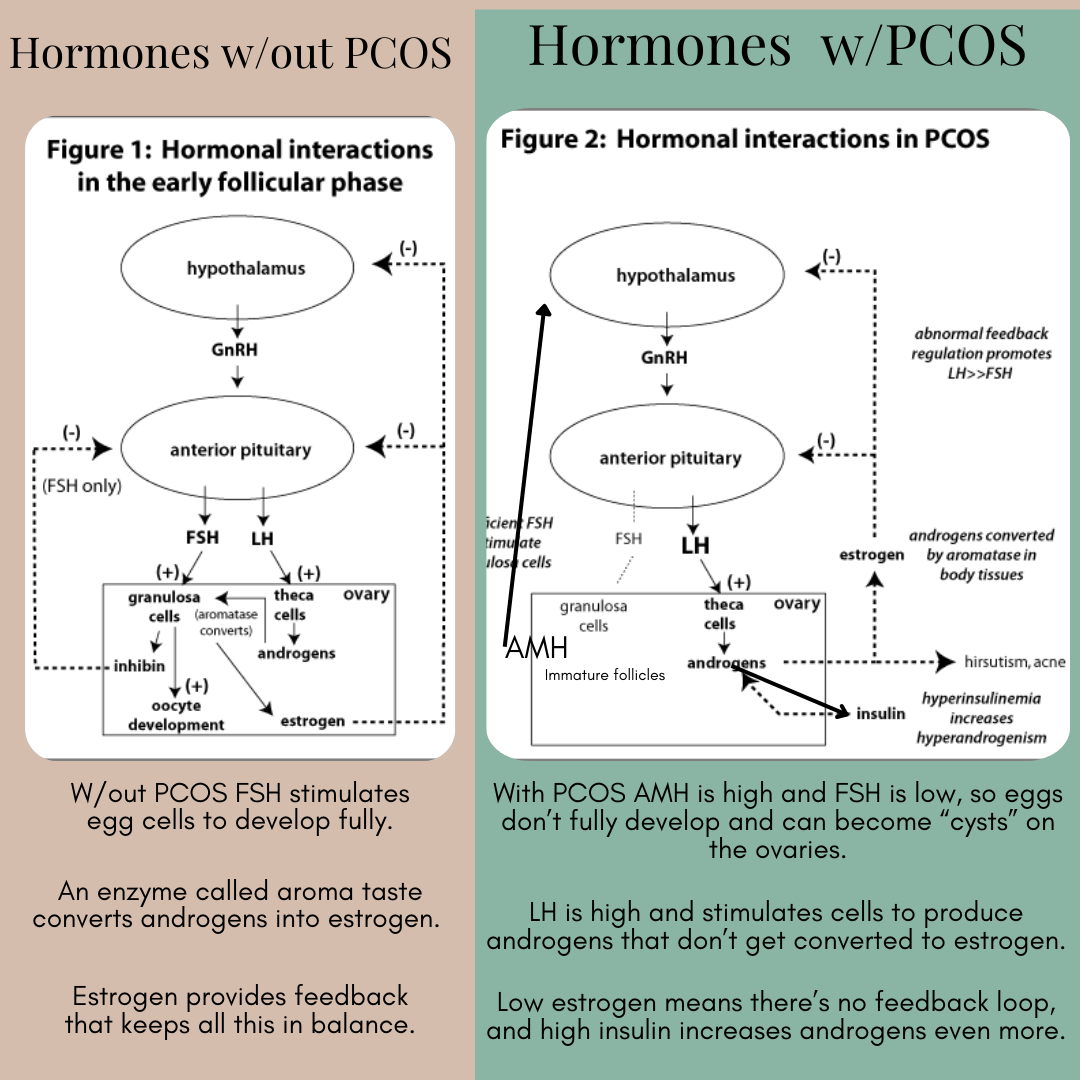
I’ve got a nerdy one for you today! What is happening with your hormones with PCOS?? Have you ever wondered? Here’s a quick overview (shout out to an old UW course that I stole these images from and modified for more detail).
What is PCOS and What Causes it?
PCOS or polycystic ovarian syndrome is a complex hormonal condition that begins in utero. We don’t actually know the cause of PCOS, but it’s thought that perhaps genetics or exposures may play a role. Don’t let people confuse you by saying it’s just a fertility condition or that we know what actually causes it. Most importantly, if you have it, it’s not your fault!
How is PCOS Diagnosed?
PCOS is diagnosed via 2 out of 3 criteria:
- Irregular Period – oligomenorrhea or amenorrhea (fancy words for long or missing periods)
- Elevated androgens or testosterone – this is arguably the most important criteria, as it is the cause of many of the symptoms associated with PCOS
- Polycystic ovaries or elevated AMH – ironically, you don’t need to have polycystic ovaries to have PCOS. Elevated AMH is a good stand-in for these and is now recognized as diagnosis criteria.
What Happens with Your Hormones with PCOS?
Hormones in Your Cycle without PCOS
In a non-PCOS body, the hypothalamus produces Gonadotropin Releasing hormone (GnRH), which stimulates the anterior pituitary to create FSH and LH. FSH stimulates egg development and the eventual release of an egg (ovulation) for potential fertilization.
FSH also stimulates immature egg cells to produce an enzyme called aromatase.
LH stimulates theca cells to create androgens (mostly testosterone), but these are converted mostly to estrogen by aromatase.
Estrogen provides feedback in this loop, so nothing gets out of control.
Hormones in Your Cycle With PCOS
With PCOS, LH and AMH are high. The high AMH, causes a feedback loop that makes FSH go down. FSH then doesn’t stimulate eggs to develop, so you get immature eggs or “cysts” on the ovaries.
The high LH tells theca cells to produce a lot of androgens. High androgens and low estrogen means the feedback loop is out of whack and continues to produce high LH.
High androgens contribute to high insulin, and high insulin contributes to the production of androgens.
This cycle continues to feed on itself unless something is done to lower androgens and insulin.
What to do if You Suspect PCOS
If you think you have PCOS, it’s worth it to get a diagnosis from a healthcare professional. After that, the first line of treatment is diet and lifestyle changes.
Need Help Treating Your PCOS?
If you like to nerd out on this or want to learn how to lower androgens and insulin, consider joining my 8-week group course this fall! We’d love to have you. We talk all about how to balance hormones and get back on track metabolically with PCOS! It’s really reasonably priced compared to a lot of group programs out there, and results are guaranteed!